
Missing Mom
Movies for When You Miss Your Mom: Five Films That Feel Like One More Long Call With Her
Missing your mom tonight? Five films about mothers and daughters, from Lady Bird's airport loop to two rocks on a cliff, for when she's far away, complicated, or gone.

· 7 min read
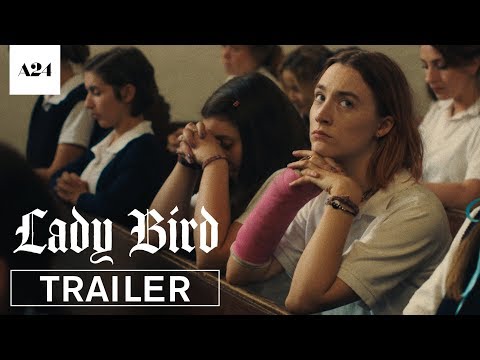
Lady Bird opens with a mother and daughter in a car, both crying at the end of an audiobook of The Grapes of Wrath. They have just finished a college tour. They agree, wet-eyed, that it was beautiful. A minute later they are fighting about money and the East Coast and whether Christine is the kind of person who deserves better, and then Christine opens the passenger door and throws herself out of the moving car.
That is what missing your mom can feel like: the closeness and the fight arriving in the same breath, and no way to get back in the car. Maybe she's a phone call away and the calls are hard. Maybe she lives across an ocean now. Maybe she's gone, and you keep reaching for the phone anyway. These five films don't pretend mothers and daughters are simple. Each one stays with the love under the arguments a little longer than real life lets us. Make something she used to cook, if you can, and settle in.
1. Lady Bird (2017)
Greta Gerwig set her solo directing debut in Sacramento in 2002. Christine McPherson (Saoirse Ronan), who insists on being called Lady Bird, wants out of her Catholic high school and out of the state. Her mother, Marion (Laurie Metcalf), a psychiatric nurse working double shifts, thinks that is neither affordable nor wise.
That opening car scene was built on purpose. Gerwig told Terry Gross on NPR's Fresh Air that "there's a quality to fighting in cars where you're trapped," and that in a car you either want to shove the other person out or jump out yourself. Christine jumps. She spends the next stretch of the film in a pink cast with a two-word message to her mother scrawled across it in marker, and that cast is the saddest joke in the movie.
The scene to wait for is the airport. Marion won't walk her daughter in. She drops her at the curb, drives the departures loop alone, and her face slowly comes apart behind the wheel before she turns back, too late. Kevin Fallon reported in The Daily Beast that Metcalf asked Gerwig to keep that scene to only a handful of takes, because playing it was so devastating. You can tell. It looks like something that could only happen once.
2. Petite Maman (2021)
What if you could meet her at eight years old, before she was anyone's mother?
Céline Sciamma's 72-minute fable asks exactly that. Nelly's grandmother has just died, and Nelly goes with her parents to clear out the house where her mother grew up. Her mother, overwhelmed, leaves without warning. In the woods behind the house, Nelly meets a girl her own age who is building a hut out of branches. The girl's name is Marion, the same as Nelly's mother.
The hut came first. Sciamma told Time Out that the image of two little girls building a tree hut in the woods popped into her head about five years before she made the film. The girls are played by Joséphine and Gabrielle Sanz, and Sciamma told Sight and Sound that they "don't even consider themselves twins – they consider themselves sisters born the same day." That's the film's whole trick in two real children: two people the same age who belong to each other in a way neither can quite explain. The same Sight and Sound piece notes that the house interiors were built in a studio as a fusion of Sciamma's own grandmothers' homes, which may be why the wallpaper and the kitchen feel like somewhere you've been.
Watch the two girls making crêpes together, flour everywhere, laughing at the mess. It's so ordinary that it shouldn't hurt, and it does. It's also gentle enough to watch with a child.
3. The Joy Luck Club (1993)

Four Chinese immigrant women in San Francisco have played mahjong together for decades. Their four American-born daughters can barely hear the stories underneath their mothers' criticism. Wayne Wang directed, from a script by Amy Tan and Ronald Bass based on Tan's 1989 novel, and the film begins just after June (Ming-Na Wen) has lost her mother, Suyuan, and has been asked to take her seat at the table.
This is the film for the questions you never asked her. Tan almost didn't let it happen: TCM's article on the film quotes her memoir, The Opposite of Fate, where she admits she "was still not sure the book should be a movie," worried about how Asian Americans would be shown. She came round, and the China sequences were shot in the country itself, during the last six weeks of production. The AFI Catalog records that on one day, when 1,000 people were needed for a crowd scene, 2,500 showed up, already dressed for their roles. When you watch Suyuan's flight along a road choked with refugees, remember that the crowd came on its own.
The kitchen is the scene, though. After a dinner where June is humiliated in front of everyone, mother and daughter finally talk, alone, over the dishes. Suyuan tells June that she sees her good heart, and gives her a jade pendant. If your mother ever said the hard thing sideways and the kind thing too late, this one will find you.
4. Terms of Endearment (1983)
The film opens on a young mother, Aurora Greenway (Shirley MacLaine), standing over her baby's crib. She can't hear the baby breathing. So she climbs in and pinches her until the baby wails, then leaves the room satisfied. It's funny, alarming and completely loving, and you already know what kind of mother Aurora is going to be.
James L. Brooks's film follows Aurora and her daughter Emma (Debra Winger) for some thirty years: the daily phone calls, the disapproval, Emma's marriage and three children and a move across the country, and Jack Nicholson as the retired astronaut next door. According to TCM, Brooks cast MacLaine quickly because "she was the only one who ever saw it as a comedy." Keep that in mind and the film opens up. Aurora is ridiculous, and the movie lets you laugh at her right up to the moment it doesn't.
Spoiler warning: the next paragraph says what happens to Emma.
In the last act, Emma is in the hospital with cancer, and Aurora, at the nurses' station, loses her composure completely, screaming for someone to give her daughter the painkiller she was promised. It's the same woman who climbed into the crib. Watching it now, missing someone, you understand that she was never really fussy. She was terrified, for thirty years, and the phone calls were how she checked that Emma was still breathing.
5. Everything Everywhere All at Once (2022)
Evelyn Wang (Michelle Yeoh) runs a failing laundromat, is being audited by the IRS and can't seem to reach her daughter, Joy (Stephanie Hsu). Then she learns she can leap into her other lives in other universes, just as something threatens all of them. Under the hot-dog fingers and the kung fu, the Daniels made a film about a mother trying to see her child. Hsu told /Film that Joy, for all her nihilism, "just wants to be loved by her mother, you know?"
The scene to wait for has no people in it. In one universe, life never formed, and Evelyn and Joy are two rocks on a cliff above a canyon, talking in on-screen text. It sounds absurd, and I laughed at the deadpan text. Then Joy's rock rolls off the edge, Evelyn's rock goes after it, and I wasn't laughing anymore.
Cinematographer Larkin Seiple told No Film School that they had wanted to shoot that scene in IMAX at a location about four hours south of Los Angeles, which he admitted would have been "the silliest use of IMAX in the history of IMAX." Time and money ruled it out. It doesn't matter. Two rocks and a few lines of text turned out to be enough to carry a very old conversation: a mother refusing to let her daughter fall alone.
Every mother in these films says the important thing badly, or late, or through something else: a cast on an arm, a jade pendant, a pinch in a crib, a rock that follows another rock over the edge. None of them gets it right the first time. That's what makes them feel like ours.
So if she's still a phone call away, call her when the credits roll, even if the last conversation didn't go well, even if it's been a while. And if she isn't, tell someone a story about her tonight. Lady Bird and her mother never really finished that drive home. You can keep it going anyway.
Sources & further reading
- NPR Fresh Air via KUNC: Greta Gerwig Explores Mother-Daughter Love (And Angst) In Lady Bird
- The Daily Beast: Lady Bird Star Laurie Metcalf Might Be the Best Actress Working Right Now (Kevin Fallon)
- Sight and Sound (BFI): Céline Sciamma, mother of invention
- Time Out: Céline Sciamma on Petite Maman (Sophie Monks Kaufman)
- AFI Catalog: The Joy Luck Club
- TCM: The Joy Luck Club (Andrea Passafiume)
- TCM: Terms of Endearment (Eleanor Quin)
- No Film School: DP Larkin Seiple on Everything Everywhere All at Once (Alyssa Miller)
- /Film: Stephanie Hsu on Everything Everywhere All at Once (Hoai-Tran Bui)
- Wikipedia: Lady Bird (film)
- Wikipedia: The Joy Luck Club (film)
- #Mothers and Daughters
- #Family
- #Grief
- #Greta Gerwig
- #Céline Sciamma
- #Amy Tan
- #Michelle Yeoh
You might also like

Daughter's Wedding Day
Movies to Watch on Your Daughter's Wedding Day: Six Films About Parents Learning to Let Go
Your daughter's wedding day, before the toast or the morning after: six films about parents and daughters, from a driveway basketball game to an apple peel falling in Kamakura.
October 4, 2026

Watching With Dad
Movies to Watch With Your Dad: Six Films for the Father Who Says "Drive Safe" Instead of "I Love You"
Six films about fathers who can't say it out loud, from a Pixar clownfish to a Busan market stall and a ballfield in Iowa, to watch on the couch with your own.
November 16, 2026

Thanksgiving
Movies to Watch When You Go Home for Thanksgiving: Six Films for the Night You're Back in Your Childhood Bedroom
Home for Thanksgiving and sleeping under your old ceiling? Six films about going home, from Planes, Trains and Automobiles to The Farewell, ordered like the long weekend itself.
November 2, 2026
Comments